Making video used to mean juggling a bunch of specialized skills all at once — writing the script, hunting down visual assets, editing the footage, adding captions, building graphics, then reformatting everything for whatever platform you’re posting to. AI’s genuinely picking up a lot of that slack now. None of this kills the creative process, to be clear, but it makes the repetitive parts a lot faster and a lot less of a headache.
For creators, marketers, educators, and small business owners, the growing overlap between conversational AI and video editing’s honestly one of the more interesting shifts happening right now. Instead of wrestling with complicated menus and timelines the whole time, people can increasingly just say what they want and let AI help turn that into something actually usable.
AI’s Taking On a Bigger Role in Video Editing
Traditional editing means knowing your way around timelines, transitions, audio tracks, effects, text layers, and export settings — and yeah, all of that still matters for detailed work. But AI genuinely takes the edge off a lot of the initial, repetitive grind that used to eat up hours.
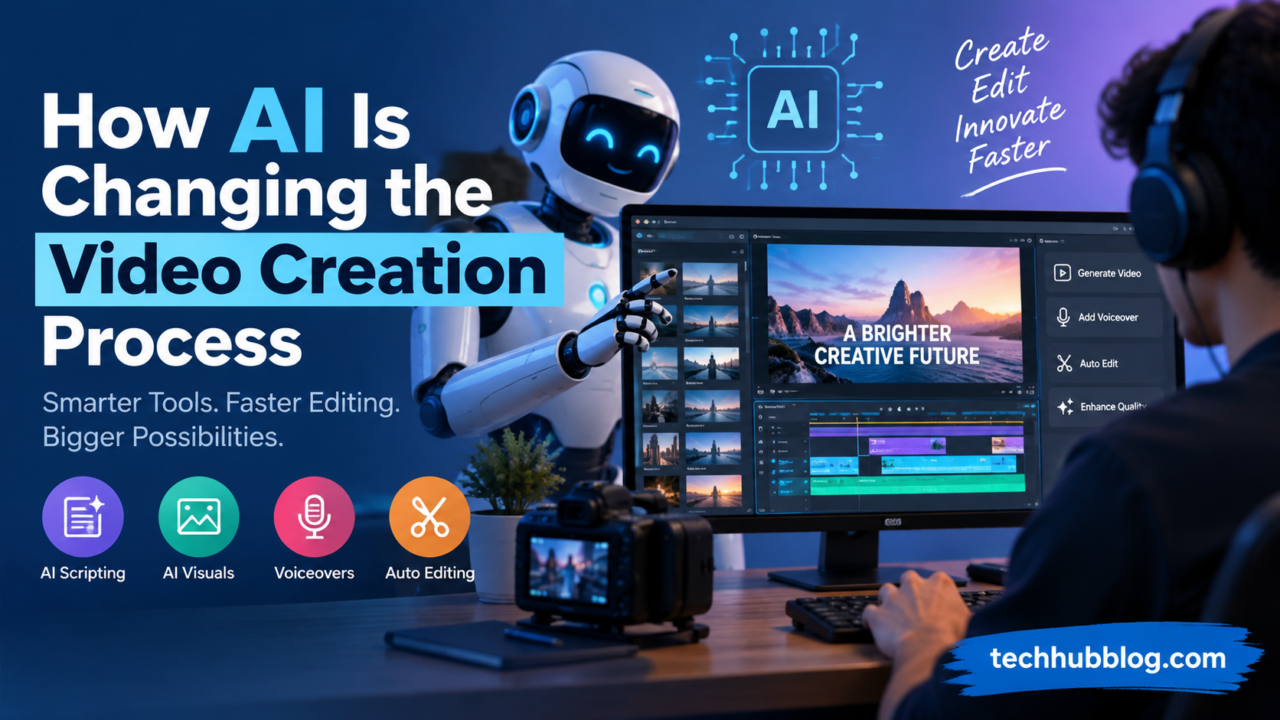
An AI-powered editor can help generate ideas, organize content, create captions, clean up audio, remove stuff you don’t want, and adapt videos for different formats. That’s genuinely useful when you need five slightly different versions of the same video and don’t want to rebuild each one from scratch.
The biggest shift, honestly, is that AI’s lowered the barrier for people without formal video-production training. Instead of learning every technical feature before you even start, you can begin with a rough idea of what you want and refine it as you go, rather than getting stuck before you’ve made anything.
Conversational AI Meeting Video Creation
One of the genuinely interesting developments here is conversational AI actually getting woven into the creative process itself. Describe a video’s subject, tone, audience, or structure, and AI assistance can help you actually build the project out from there.
An AI video editor with ChatGPT is a good example of this broader shift — natural-language back-and-forth becoming part of the actual editing workflow, not just a separate brainstorming step off to the side. Text-based AI and video editing stop being two unrelated things and start working together while you’re planning and developing content.
This genuinely helps in the early stages especially. Start with a rough concept, sketch out a short script, figure out the key scenes, and move toward actual editing from there. You still need real human judgment, though, to decide whether the end result actually says what you wanted it to say.
AI-Generated Images and Visual Assets
Video projects need more than just footage, most of the time. Backgrounds, illustrations, thumbnails, title cards, concept art — all these little visual pieces make a video feel more put-together. Building them by hand takes real time, especially when you need several variations of the same idea.
AI image generation offers a genuine shortcut here. Tools like GPT Image 2.5 show how far you can get with just a text description — no more scrolling through stock libraries hoping something close enough turns up. Describe what you need, and you can iterate through ideas fast.
That said, always look closely at generated images before they go anywhere near published content. Composition, realism, how text renders, proportions, consistency — all of it can wobble from one generation to the next. For anything professional, a real human check is genuinely non-negotiable, not a nice-to-have.
Short-Form Content Just Got a Lot Easier
Short-form video’s created a genuinely intense demand for fast, efficient editing. Platforms built around quick clips basically expect creators to post constantly, and doing all that editing manually gets exhausting fast.
AI helps here by spotting the important bits in longer recordings, generating captions, suggesting where to cut, and reformatting for vertical viewing. That takes a real chunk of manual work off the table when you’re just trying to get a basic version out the door.
Doesn’t mean every AI-generated edit’s ready to publish straight away, though. Timing, pacing, humor, storytelling, what your specific audience actually expects — that stuff’s genuinely hard for a machine to judge on its own. Creators who actually review and tweak the AI’s output tend to end up with something that feels a lot more intentional.
Human Creativity Hasn’t Gone Anywhere
For all the progress AI’s made, good video still comes down to real human decisions at the end of the day. AI can throw out possibilities endlessly, sure, but it doesn’t inherently get every cultural reference, brand voice, audience expectation, or emotional beat that actually matters to your specific project.
Creators genuinely do better treating AI like an assistant, not some infallible replacement for their own creative instincts. The workflow that actually works best is usually a loop — generate something, review it, edit it, refine it, repeat until it’s right.
AI might toss out a script draft or a visual concept, and then the creator goes in and makes the wording sound like an actual human wrote it, trims the fat, fixes the pacing, and double-checks the message is genuinely accurate before it goes anywhere.
Things Worth Actually Thinking Through
As AI becomes just part of everyday content work, it’s worth keeping accuracy, originality, copyright, privacy, and transparency on your radar too. Generated material should get checked for anything misleading, or for accidentally landing too close to someone else’s existing work.
It’s also worth actually understanding the permissions on any third-party footage, music, images, or other assets that end up in a project. AI touching something doesn’t magically make it legally or commercially clear to use — that’s still on you to verify.
Privacy’s worth a real thought too, especially uploading personal footage, confidential business material, or anything sensitive to an online service. Actually reading the terms and privacy practices helps you make a genuinely informed call before hitting upload, rather than assuming it’s fine.
Where This Is Probably Going
AI’s likely to keep getting woven deeper into video workflows rather than sitting off as a separate add-on step. Future editing tools will probably combine writing help, image generation, audio processing, animation, and timeline editing into one much more unified creative flow.
The real win here isn’t just “things get automated,” though. It’s that technical friction drops enough that creators actually get to spend more time on the ideas themselves and on making the storytelling genuinely good.
As these tools keep getting better, understanding what they’re actually good at, and where they still fall short, is going to matter just as much as knowing traditional editing skills. AI can genuinely speed things up, but thoughtful human direction is still what makes a video actually useful, accurate, distinctive, and worth watching.