

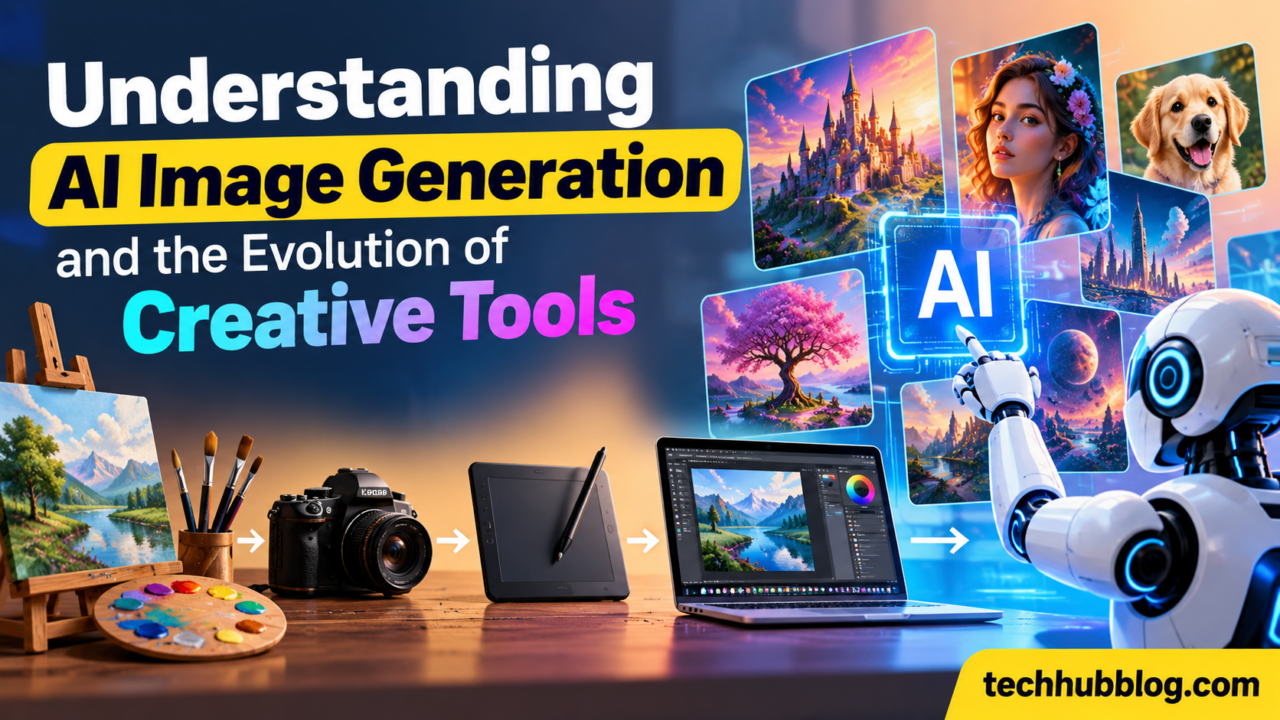
AI changed visual content. Completely. The way people think about images? Different now.
Stuff that used to need special software. Serious design knowledge. Hours of manual work. Now? A system can help with it. From written instructions. That’s it.
Big shift, honestly. Image creation got way more accessible. Way more people can do it. But new questions showed up too. Quality. Originality. Copyright. Responsible use. None of them small.
What Is AI Image Generation?
Simple idea, really. Technology that creates visuals. From text prompts. Or other kinds of user input.
No drawing every element by hand. A user just describes something. A scene. An object. A character. An environment. Maybe a visual style. The AI model reads those instructions. Interprets them. Then produces an image.
How does it actually work? Machine learning, mostly. Modern image-generation systems lean on trained models. Models that spot links between language and visual features. Words on one side. Visuals on the other.
A prompt goes in. The system gets to work. Objects. Colors. Composition. Lighting. Artistic traits. All processed. Then out comes an image. One that tries to match the description. Tries, anyway.
And the results? All over the map. Realistic scenes. Product-style imagery. Illustrations. Conceptual artwork. Backgrounds. Imaginative compositions. Pretty much anything.
Why Text-to-Image Tools Matter
Biggest plus? Accessibility. Plain and simple.
Traditional digital image creation isn’t easy. Needs know-how. Design apps. Photography. Illustration. Image editing. Generative AI lowers some of those walls. People just use ordinary language. Explain the idea. Done.
Take an example. Someone’s writing an article. Topic? Sustainable architecture. They need an illustration. A modern house. Solar panels. Trees around it. Natural landscaping. The old way? Source multiple images. Combine them by hand. Slow. Messy. The new way? One prompt. Describe the concept. That’s all.
Does that kill human creativity? Nope. Not at all. Creativity just moves. Shifts somewhere else. Users now spend time on different things. Developing concepts. Refining prompts. Judging results. Deciding how generated stuff fits a bigger project. Still creative work. Just different work.
Understanding Prompt Quality
Here’s the thing. Instructions matter. A lot. Image quality depends heavily on what the model gets told.
Short prompt? Can work. Can give something useful. But specific descriptions? Usually better. Clearer guidance for the system.
What makes a prompt useful? A few things. The main subject. The environment. The perspective. Lighting. Mood. The visual approach. Cover those, and the model’s got something to work with.
Quick example. “A city.” Vague. Too vague. Instead? A futuristic coastal city. At sunset. Seen from street level. Modern architecture. Pedestrians in the foreground. Big difference. Night and day, really.
But careful. More details don’t always mean better images. Not automatically. Pile on conflicting instructions, and things get confusing. The model struggles to interpret them. So prompting? Mostly iterative. Generate a first result. Look at it. Figure out what needs changing. Adjust the description. Try again. Repeat.
Free AI Image Generation and Accessibility
Free access matters here too. The availability of a free AI image generator pushed generative visual tech into wider use. Way wider.
Who benefits most? Students. Independent creators. Small publishers. People who just want to experiment. Test the waters. Before jumping into more advanced workflows.
Still, one catch. “Free” doesn’t always mean unlimited. Services differ. Generation limits. Image resolution. Processing speed. Available features. Commercial-use conditions. Access to certain models. All of it varies.
So what’s the move? Check the terms. Always. Especially before relying on generated images. For professional work. Or commercial projects. Honestly, it’s worth the few minutes.
The Role of Advanced Image Models
The tech keeps moving. AI image generation keeps developing. Through increasingly capable models.
Systems like GPT Image 2.5 show where things are going. The broader trend? Models that handle more complex instructions. And produce more detailed visuals. Better understanding. Better output.
As these models get better something interesting happens. Generating an image vs editing an image? Becoming blurry. Looser. Users can tell us how to modify an existing visual. We’re not gonna make it, man. Create differences. While keeping the essence of the original piece.
What does it matter. Especially for the content creator? As visual production is normally revision. Not a one-time generation. Edit. Modify. Refine. That is the real workflow.
Practical Uses Across Different Industries
Where is it useful? Many places. Lots of fields.
Publishers ? Conceptual sketches. Teachers? Images for explaining abstract topics Marketing teams. Design exploration of concepts. Developers? Early visual references. For the games. Uses. Digital spaces.
Architecture and interior design too. Rapid visualization helps there. A written concept becomes an approximate visual reference. Fast. Before the project hits the detailed design stage.
Social media creators? Plenty to use. Backgrounds. Illustrations. Thumbnails. Creative concepts.
One warning, though. Review everything. Carefully. AI systems slip up. Inaccurate objects. Unusual proportions. Details that don’t match the intended subject. So check first. Every time.
Limitations and Ethical Considerations
Rapid progress, sure. But perfect? No. Not yet.
AI image generators still struggle. Where exactly? Highly specific instructions. Complex scenes. Readable text. Consistent characters. Precise technical details. And results vary. Considerably. From one generation to the next.
Then there’s copyright. And ownership. Tricky stuff. The legal treatment of AI-generated content isn’t the same everywhere. Differs between jurisdictions. Still developing, too. So users need to know the rules. The ones for their location. And the terms of their specific AI service.
Misleading imagery? Another real concern. A realistic generated picture can fool people. Might pass for a photograph. Of a real event. Or a real person. That’s a problem. So labeling helps. Clearly marking synthetic or AI-generated material. Especially where authenticity matters.
The Future of Visual Creativity
So where’s this heading? AI image generation is becoming one more tool. Part of the modern creative toolkit. Not a complete replacement. Not for human designers. Not for photographers. Not for artists.
Human judgment still counts. Big time. Deciding what should be created. Checking if the result communicates the intended idea. Figuring out how the final image gets used. Those calls? Still human.
As models get more capable, one change stands out. Maybe the most significant one. Fewer technical barriers. Between an idea and its visual representation. Anyone who can describe a concept clearly? They’ll increasingly explore visual possibilities. Without mastering every traditional production technique. That’s huge.
Bottom line? Responsible use is about balance. Convenience on one side. Critical evaluation on the other. Understand how these systems work. Recognize their limitations. Check usage rights. Keep human oversight in place. Do that, and users make better decisions. While exploring what generative visual content can do.
1 comment
Comments are closed on this article.